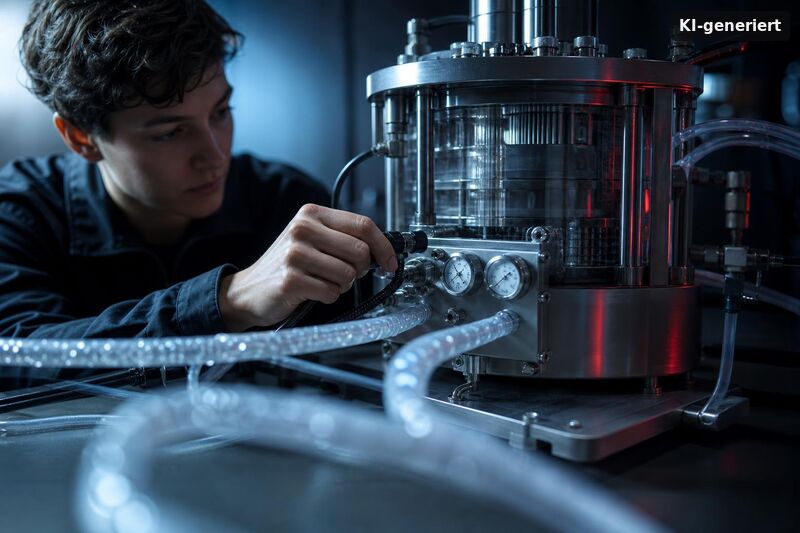
The Future of 3D printing Rapid.Tech 3D unveiled at the 20th edition
From May 14 to 16, 2024, Rapid.Tech 3D marks its 20th anniversary in Erfurt with more than 100 additive manufacturing highlights and an international congress featuring 60+ expert talks. For the Future of 3D printing Rapid.Tech 3D serves as a compact reality check on where AM is delivering today and what is coming next across materials, processes, and end-use parts.
What trends define the Future of 3D printing at Rapid.Tech 3D 2024?
The headline trend is production-grade AM moving beyond prototypes: lightweight end-use parts, embedded electronics in elastomers, and certified medical devices are front and center.
Across the halls and forums, the 2024 program concentrates on real deployments. Finalist exhibits and industry case studies show elastomer printing with integrated electronics for wearables, custom oncological implants, and large-scale construction. In practice, live demos at Rapid.Tech 3D have historically separated lab concepts from production-ready workflows, and the 20th edition follows that pattern with clearly defined use cases, cost baselines, and supplier ecosystems.
Exploring innovations at Rapid.Tech 3D
Among the strongest signals comes from the 3D Pioneers Challenge, the international design and technology competition that stages its ninth finale at the show. From submissions spanning 25 countries across five continents, 43 entries were shortlisted for Erfurt—an unusually broad snapshot of AM’s material and application space.
Spotlight on futuristic and functional 3D‑printed designs
One exhibit to watch is the 3D‑printed dress by Dutch designer Anouk Wipprecht and U.S.-based Chromatic 3D Materials. With motion‑responsive LEDs embedded directly into elastic 3D‑printed substrates, it demonstrates how electronics and soft materials can be co‑manufactured—reducing assembly steps for wearables.
On the medical front, a custom femoral (thigh) implant created by U.S. designers and Israeli clinicians targets bone reconstruction after cancer. It reflects a wider shift toward patient‑specific implants enabled by AM lattice structures and porous surfaces for osseointegration. As an architectural counterpoint, a scale version of Europe’s largest 3D-printed house (from Heidelberg) underlines how large-format printing can blend design freedom with reduced material waste. Sustainability angles are also visible in WILLOWPRINT’s wood-waste feedstock for 3D‑printed seating, a pragmatic approach to circular materials.
How does the 3D Pioneers Challenge push the Future of 3D printing?
By rewarding manufacturable breakthroughs, the competition channels R&D toward scalable applications rather than one-off showpieces.
The 3D Pioneers Challenge acts as an innovation filter: jurors evaluate not only aesthetics and novelty but also printability, durability, and system readiness. Main sponsorship by the Thuringian Ministry of Economy, Science, and Digital Society reinforces a policy focus on commercialization. For attendees benchmarking suppliers, the finalists often flag where software, materials, and printers are coalescing into viable stacks—useful signal amid AM’s fragmented toolchain.
From fashion to function: the broad applications of 3D printing
The exhibition floors bring 96 exhibitors from Germany and abroad, covering the spectrum from polymers and metals to composites and construction-scale systems. The mix includes global manufacturers—Audi, BASF, BMW, Boeing, Daimler, Rheinmetall, Siemens, Trumpf—alongside mid-sized specialists and Thüringen-based research groups such as 3Faktur, Bauhaus-Universität, Burms, Fraunhofer IOF, and MiMtechnik. This spread mirrors AM’s dual track: incremental upgrades to legacy lines and greenfield digital factories.
Where AM is delivering value now
- Healthcare: patient-specific implants, surgical guides, and porous lattices for faster recovery.
- Automotive/aerospace: lightweight brackets, tooling, and spares with shortened lead times.
- Construction: large-format printing for formwork and structural elements with material savings.
- Wearables/soft goods: embedded electronics in elastomers to cut assembly and enable new form factors.
- Sustainability: bio-based or recycled feedstocks (e.g., wood-waste filaments) for lower-impact parts.
Who is steering the AM agenda at the 20th Rapid.Tech 3D?
The congress—nine forums with 60+ international speakers—is the event’s engine room, built for practitioners mapping AM roadmaps against certification, supply chains, and cost models.
Programmatically, the forums balance materials science with production engineering and quality. From editorial experience covering prior editions, Sie profitieren besonders von sessions that quantify total cost per part, machine utilization, and post‑processing labor—variables that decide if a pilot scales. New this year as an institutional signal: the Additive Manufacturing Working Group of the VDMA serves as the event’s non-profit patron, anchoring the show more firmly in industrial machinery discourse.
How to get the most out of Rapid.Tech 3D on site?
Join curated walkthroughs and target forums aligned to your part families; keep a short list of must-see demos to validate against your BOM and lead-time goals.
A press tour on May 14, 2024, from 10:50 to around 11:50, guides visitors through a cross-section of exhibitor stands with concise presentations—useful for compressing the signal-to-noise ratio on day one. Across three days, the fastest wins typically come from side-by-side comparisons of materials and post‑processing steps rather than headline print speeds alone.
Support and sponsorship at Rapid.Tech 3D
Regional and industry backing remain visible. The Thuringian Ministry of Economy, Science, and Digital Society is main sponsor of the 3D Pioneers Challenge, and the event’s patronage now lies with the VDMA’s Additive Manufacturing Working Group. Together, they nudge the conversation toward standards, supply chains, and workforce skills—prerequisites for the Future of 3D printing Rapid.Tech aims to spotlight.
Fazit
Rapid.Tech 3D’s 20th edition sharpens the focus on production-grade AM: certified implants, embedded electronics in elastomers, and large-format builds move from showcase to workflow. With 96 exhibitors and nine forums, Sie erhalten a concise view of where materials, machines, and software are converging. The 3D Pioneers Challenge adds vetted proof points with scalability in mind. Backing from the VDMA and Thüringen underscores industrialization, keeping the Future of 3D printing Rapid.Tech promises grounded in manufacturability and cost control.
The evolution of 3D printing technology not only enhances manufacturing processes but also intertwines with advancements in other tech sectors. One such integration is seen in the realm of artificial intelligence and blockchain. The AI Blockchain Integration Future explores how these technologies converge to create more efficient systems and could potentially impact the future of 3D printing by optimizing production lines and increasing security in manufacturing protocols.
Another fascinating crossover is with augmented reality (AR) technology. The Dyson augmented reality vacuum cleaner utilizes AR to assist users in navigating complex spaces while cleaning. This principle can be applied to 3D printing where AR could provide real-time project visualization and adjustments, thereby enhancing precision and user interaction with 3D printing technologies.
Moreover, the integration of edge computing in IoT and AI is revolutionizing various tech sectors. The Supermicro Edge AI IoT Solutions demonstrate how edge computing facilitates faster data processing and reduced latency. This technology could be pivotal for 3D printing applications, especially in remote locations where immediate data processing is crucial for timely and accurate 3D print results.
These links and insights not only broaden the understanding of 3D printing's current capabilities but also hint at its expansive future potential, integrating with various cutting-edge technologies to enhance performance and functionality.