Schnelle Antworten
How do M2M SIM cards for solar energy improve uptime during network failures?
How does national roaming affect EV charger availability and OCPP connections?
What should Sie check before deploying M2M SIMs to PV plants or EV chargers?
How does secure remote access work with M2M SIM cards for inverters and EV infrastructure?
How do centralized SIM management and data-plan caps help control costs for fleets?
Where can Sie see wherever SIM’s M2M SIM portfolio at The Smarter E Europe 2026?
The Smarter E Europe: wherever SIM presents M2M SIM cards for solar energy and e-mobility applications
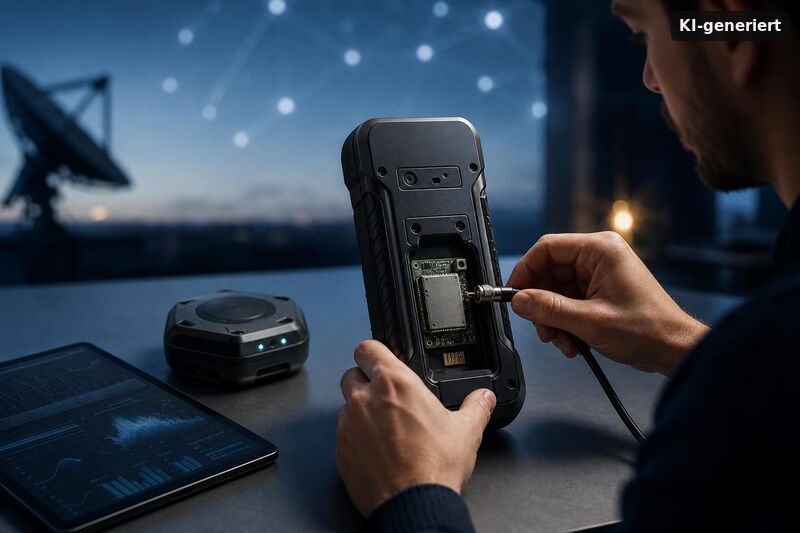
At The Smarter E Europe 2026 in Munich (June 23–25, 2026), wherever SIM showcases its M2M SIM cards for solar energy and e-mobility, focusing on secure remote access, national roaming and real-time telemetry for PV plants and charging infrastructure. If Sie deploy or operate distributed assets, these M2M SIM cards for solar energy and EV charging aim to improve uptime and cut site visits through resilient multi-network connectivity.
Revolutionizing energy management with M2M SIM cards
wherever SIM positions its IoT/M2M portfolio as a connectivity layer for PV parks, battery storage, smart grid equipment and EV chargers, combining global reach with security features and centralized SIM lifecycle management. Stand 2026, the company emphasizes national roaming, so each SIM attaches to the strongest available network per site—useful on rural solar fields or underground parking garages where single-operator coverage can fail. For operators, this translates into more stable OCPP, SCADA or MQTT links and fewer truck rolls.
How do M2M SIM cards for solar energy improve uptime?
They aggregate multiple mobile networks per country and fail over automatically, keeping data flowing even if one carrier drops. In practice, this reduces telemetry gaps, enables secure remote resets and firmware updates, and stabilizes metering and performance analytics across diverse PV locations.
Solar O&M teams rely on continuous data for fault detection, yield verification and inverter health. With national roaming, SIMs reconnect to a secondary network when the primary degrades, which helps sustain real-time KPIs and alarms. Aus Redaktionssicht lohnt es sich, SIM profiles with granular data caps and alerting to prevent cost runaways during outages or misconfigurations.
What changes for EV charging operators with national roaming?
Session start failures and aborted payments drop when chargers can switch to the best local network, especially at congested sites or coverage fringes. Operators gain more reliable OCPP backhaul for authorization, pricing updates and remote diagnostics, which shortens downtime windows.
In the field, Sie reduzieren manuelle site reboots and on-site technician visits when connectivity issues are the root cause. Stable cellular backhaul also supports secure remote access for firmware updates, RFID whitelist sync and dynamic load management signals—key for multi-stall DC fast-charge sites.
Ensuring stable data connections for PV systems and charging infrastructure
Once deployed, wherever SIM’s M2M profiles enable encrypted, near real-time communication for metering, predictive maintenance and remote control. The core differentiator is national roaming: within one country, the SIM can register with multiple carriers, improving coverage breadth and resilience. For PV and storage, that supports inverter telemetry, tracker controls and revenue-grade metering. For mobility, it stabilizes charger-heartbeat traffic, CDR uploads and remote unlock commands.
Key features and benefits for energy and mobility
- Multi-network access with automatic failover (national roaming) to the strongest signal at each site.
- Global footprint suitable for cross-border assets and OEM shipments.
- Secure remote access for firmware updates, diagnostics and configuration changes.
- Flexible data plans, from kilobytes for telemetry to high-volume SKUs for video-enabled sites.
- Central online platform for SIM provisioning, monitoring and cost controls.
Where can Sie see the solutions at The Smarter E Europe 2026?
The smarter E Europe brings together Intersolar Europe, ees Europe, Power2Drive Europe and EM-Power Europe in Munich from June 23–25, 2026. According to Messe München, it is “Europe’s Largest Alliance of Exhibitions for the Energy Industry.” Sie finden Event-Rahmendaten unter The Smarter E Europe 2026 overview. wherever SIM states it will present its M2M SIM portfolio for the solar industry and e-mobility, highlighting secure remote access and real-time data transmission; Details stehen in der official press information.
Advantages of M2M SIM cards for solar energy
For PV operators and EPCs, m2m sim cards for solar energy centralize connectivity across heterogeneous hardware fleets—string inverters, data loggers, trackers and meters—without locking Sie to a single carrier. The result is higher data availability for performance ratios, faster root-cause analysis and fewer site visits.
- Real-time telemetry: stable backhaul for yield tracking, IV-curve diagnostics and alarms.
- Secure remote access: encrypted tunnels for inverter resets and parameter changes reduce outage durations.
- Cost control: tailored data plans and per-SIM caps prevent bill shocks during fault storms.
- Scalability: standardized SIM management scales from pilot arrays to multi-country portfolios.
In der Praxis hat sich gezeigt: Bei Freiflächenanlagen in topografisch schwierigen Lagen ist national roaming oft der Unterschied zwischen täglicher Datenlücke und vollständiger Tageskurve. Für Asset-Manager beschleunigt das Monatsabrechnungen und KPI-Reviews.
What should Sie check before deploying M2M SIMs to PV or chargers?
Validate radio conditions and fallback carriers at each planned site, and map data budgets to device behavior under faults. Neglecting this often leads to unexpected failover patterns or burst traffic after reconnects.
Aus Redaktionssicht empfehlen wir: field tests with multiple antennas, clear APN and VPN policies, and alerting on unusual CDR volumes. For EV chargers, verify OCPP timeouts and retry logic with simulated dropouts; for PV, confirm logger buffering and timestamp integrity to avoid skewed analytics after reconnects.
wherever SIM’s positioning and scope
According to company materials, wherever SIM serves energy technology—from ground-mounted PV to offshore wind—and e-mobility, combining multi-network access with an online platform for SIM administration and flexible data tariffs. The company highlights long-running partnerships and a global service footprint, with continuous development alongside international partners. Technical details and sector pages are available via the company’s resources for energy technology and IoT connectivity.
Fazit
The Smarter E Europe 2026 puts connectivity center stage for distributed energy and mobility. With m2m sim cards for solar energy and EV charging, wherever SIM targets fewer outages, safer remote access and consistent telemetry through national roaming and global reach. Wenn Sie PV- oder Ladeflotten skalieren, zählen funktionssichere Backhaul-Wege mehr als theoretische Bandbreite. Praxisnah geplant—mit Site-Surveys, klaren APN/VPN-Policies und Datenbudget-Alerts—stellen M2M-SIMs die Weiche für niedrige OPEX und verlässliche KPIs.
The Smarter E Europe event showcases the latest advancements in the solar and e-mobility sectors. One of the highlights is the presentation of M2M-SIM cards by wherever SIM, designed for solar energy and electric vehicle applications. These SIM cards promise to enhance connectivity and efficiency in these growing industries.
In other related news, the KfW Tunisia Green Energy Cable project aims to boost renewable energy solutions. This initiative aligns with the goals of improving energy efficiency and sustainability, similar to the efforts seen at The Smarter E Europe event. Both projects highlight the importance of innovative technology in the green energy sector.
Furthermore, the development of transparent solar windows university research is another exciting advancement. These windows can generate solar power while maintaining transparency, offering a dual function that could revolutionize building designs. This technology complements the use of M2M-SIM cards in solar applications, enhancing overall energy solutions.
Last but not least, the SEG Solar Grand Batang City PV Park project is a significant development in the solar industry. This large-scale photovoltaic park aims to provide clean energy to a vast area, showcasing the potential of solar power on a grand scale. The integration of advanced technologies like M2M-SIM cards can further optimize the performance and monitoring of such solar projects.