Schnelle Antworten
What changes for a data center with Supermicro X14 liquid cooling servers?
How much better are Intel Xeon 6 E-core (6700-series) X14 systems?
When will Supermicro X14 P-core (6900-series) servers be available?
What standards and components are included across the Supermicro X14 platform?
What is in Supermicro’s liquid cooling integration kit for X14?
How does liquid cooling affect PUE and hotspots for X14 deployments?
Supermicro X14 liquid cooling servers: New AI, rackmount, multi-node and edge families with Intel Xeon 6
Supermicro has expanded its X14 portfolio at Computex 2024 with support for Intel Xeon 6 processors, starting with E-core 6700-series systems and adding P-core 6900-series options soon. The Supermicro X14 liquid cooling servers target maximum performance per watt across AI, cloud-native and edge workloads, with air- and liquid-cooled configurations designed for scalable deployments.
What do Supermicro X14 liquid cooling servers change for data centers?
They raise density and efficiency targets: Supermicro projects up to 2.5× higher rack density and 2.4× better performance per watt with Intel Xeon 6 E-cores versus prior gen, and P-cores promise 2–3× better AI performance with up to 2.8× memory bandwidth. In practice, that means fewer racks for the same throughput and lower cooling overhead when Sie liquid-cool at rack scale.
The X14 generation standardizes on DDR5 (up to 6400) and MCR-DIMMs (up to 8800 MT/s), CXL 2.0 and up to 400G networking, along with advanced E1.S and E3.S storage. Supermicro cites up to 576 CPU cores per node depending on SKU, with pin compatibility between E-core and P-core variants to simplify lifecycle planning. The platform is also the first from Supermicro to support the OCP Data Center Modular Hardware System (DC‑MHS), reducing complexity for cloud providers and hyperscalers. Source specs and claims are detailed in Supermicro’s announcement and product pages (Computex 2024 release, X14 systems overview).
Performance profile: E-cores now, P-cores next
Intel Xeon 6 with E-cores (6700-series) deliver single-threaded, energy-efficient cores tuned for scale-out: cloud-native CDNs, Kubernetes microservices, unstructured databases and analytics. Upcoming 6900-series P-cores increase core counts, TDP, memory channels and MCR-DIMM support to accelerate AI training/inference and memory-bound tasks. Supermicro’s own projections peg P-core systems at two to three times the AI performance of prior-gen Xeon (4th Gen) baselines.
How is the liquid cooling integrated and what does it include?
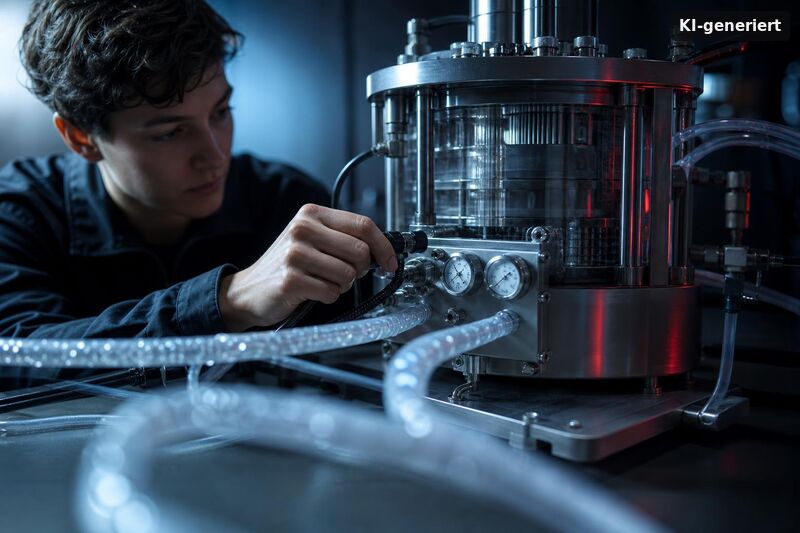
Supermicro ships a complete, data-center-scale kit: CPU/GPU cold plates, a cooling distribution unit, manifolds, hoses and an external cooling tower, all designed and manufactured in-house. That end-to-end approach is intended to reduce integration risk and improve serviceability compared with mixed-vendor liquid loops.
From an operations angle, Sie können liquid cooling add-on to X14 deployments to cut PUE toward ~1.05 in suitable facilities and flatten hotspot issues that limit CPU/GPU turbo states under air. Supermicro’s rack plug-and-play integration, combined with DC‑MHS chassis, aims to shorten deployment time at scale. Aus Redaktionssicht empfiehlt es sich, die Facility-Side-Wasserkühlung früh mitzuplanen (water quality, supply/return delta‑T), damit die Effizienzgewinne der Supermicro X14 liquid cooling servers auch im Betrieb ankommen.
Recalibrating your fleet: Where do E-core and P-core X14 models fit?
E-core X14 (now shipping) map well to high-concurrency, stateless services where power-per-instance is the KPI. P-core X14 (coming soon) map to training/inference, VDI, rendering and tightly-coupled HPC, where per-socket performance and memory bandwidth dominate. Pin-compatibility eases transitions if Sie später von E- auf P-cores in denselben chassis- und board-familien wechseln möchten.
Manageability and standards
Across X14, Supermicro emphasizes improved manageability and security, open standards, and rack-scale optimization. Support for PCIe 5.0, Gen5 NVMe and CXL 2.0 enables direct-attached accelerators and memory expansion options that were impractical on earlier gens. For operators, DC‑MHS alignment simplifies field service and part interchangeability across large fleets.
Which Supermicro X14 systems are available now, and which are coming?
Available now: E-core 6700-series models span dense multi-node, general-purpose rackmount, cloud-optimized and edge/telco form factors. Coming soon: P-core 6900-series X14 systems targeting GPU-heavy AI and HPC, plus new 2U4N high-density nodes for financial services, manufacturing and scientific workloads.
Available now with Intel Xeon 6 (E-cores, 6700-series)
- SuperBlade® – Density-optimized multi-node for AI, analytics, HPC, cloud and enterprise; up to 34,560 Xeon compute cores per rack.
- Hyper – Scale-out rackmount with flexible storage and I/O for broad enterprise and cloud requirements.
- CloudDC – All-in-one cloud platform based on OCP DC‑MHS with flexible I/O and storage, dual AIOM (PCIe 5.0; OCP 3.0) for maximum throughput.
- WIO – Cost-effective, flexible I/O architectures for tightly tuned enterprise builds.
- BigTwin® – 2U-2N or 2U-4N with two processors per node and tool-less service; new E3.S options boost density and throughput.
- GrandTwin® – Single-socket multi-node with front hot-swap nodes and E1.S storage for high density and simpler cold-aisle service.
- Hyper-E – Short-depth, front‑I/O variants for edge data centers and telco racks; supports up to three high-performance GPU or FPGA cards.
- Edge/Telco – Compact, telco-optimized designs with optional DC power and operation up to 55 °C (131 °F).
- Petascale Storage – EDSFF E1.S/E3.S-based storage with leading density and performance in 1U/2U envelopes.
Coming soon with Intel Xeon 6 (P-cores, 6900-series)
- GPU servers with PCIe GPUs – For HPC, AI training, rendering and VDI; leverages next-gen accelerators for performance and cost gains.
- Universal GPU servers – Modular, standards-based platforms for extensive AI training and LLMs, with options including PCIe, OAM and NVIDIA SXM.
- New multi-node servers – High-density 2U4N systems with front-access service design and flexible I/O and drive configurations.
Scale, TCO and deployment timing: What should Sie plan for in 2025?
Expect liquid cooling to move from niche to necessary for high‑TDP fleets: Supermicro estimates up to 20% of data centers will require liquid cooling. The company’s global capacity—5,000 racks/month total, including around 1,350 liquid‑cooled racks—supports rapid rollouts for cloud and hyperscale customers in 2025.
For TCO, the calculus is shifting. If Ihre workloads are GPU- or memory-bandwidth bound, the P‑core X14 path paired with liquid cooling can reduce rack count and energy per inference or training epoch. If Ihre workloads are instance-saturated microservices or content delivery, E‑core X14 nodes deliver better cost-per-instance and power-per-instance without overprovisioning compute.
Unmatched flexibility and scalability across the X14 platform
The X14 architecture retains Supermicro’s Building Block approach, letting Sie mix E- and P‑core systems in the same generation, add direct liquid cooling where it pays back, and standardize on DC‑MHS for fleet serviceability. Support for CXL 2.0, PCIe 5.0 and Gen5 NVMe ensures headroom for next‑wave accelerators and memory expansion. From an operator standpoint, that translates to faster qualification cycles and fewer bespoke SKUs to manage.
Editorial takeaway
In der Praxis hat sich gezeigt: Die größten Effizienzgewinne kommen nicht nur von neuen CPUs, sondern von der Kombination aus right‑sized cores, faster memory and reliable liquid loops. Aus Redaktionssicht lohnt es sich, Pilot-Racks mit Supermicro X14 liquid cooling servers früh zu evaluieren, inklusive Facilities‑Integration und service playbooks, bevor Sie breite Migrationswellen starten.
Fazit
Supermicro’s X14 generation brings Intel Xeon 6 E-cores now and P-cores soon, tying compute gains to practical rack-scale liquid cooling. The lineup covers dense multi-node, cloud and edge systems with DC‑MHS, CXL 2.0, DDR5/MCR-DIMMs and up to 400G networking. For Sie bedeutet das: höhere Dichte, bessere Performance pro Watt und klarere Migrationspfade zwischen E- und P‑cores. Wer AI- oder bandwidth-heavy Workloads betreibt, plant 2025 besser mit Liquid-Cooling‑fähigen Racks. Mit der breiten Plattform und Supermicros Integrationstiefe lässt sich der Übergang planbar und servicefreundlich umsetzen.
Supermicro's new X14 AI, rackmount, multi-node, and edge server families, powered by Intel® Xeon® 6 processors, are setting new standards in the technology world. These servers, soon to feature P-Core systems with liquid cooling, are designed to meet the growing demands for high-performance computing solutions. As you explore the potential of these advanced servers, you might also be interested in related innovations in the tech industry. One such innovation is the liquid cooled AI data center, which is revolutionizing the way data centers operate by enhancing efficiency and reducing energy consumption.
Another noteworthy advancement is the SentinelOne AI-driven cybersecurity innovations. These innovations are crucial for protecting the vast amounts of data processed by servers like the new X14 family. By integrating AI-driven security measures, you can ensure that your data remains secure and your operations run smoothly.
Additionally, the NVIDIA Jetson Orin edge AI systems offer cutting-edge solutions for edge computing. These systems are particularly relevant for the new Supermicro edge servers, providing enhanced processing power and efficiency at the network's edge. By leveraging these advanced technologies, you can stay ahead in the rapidly evolving tech landscape.